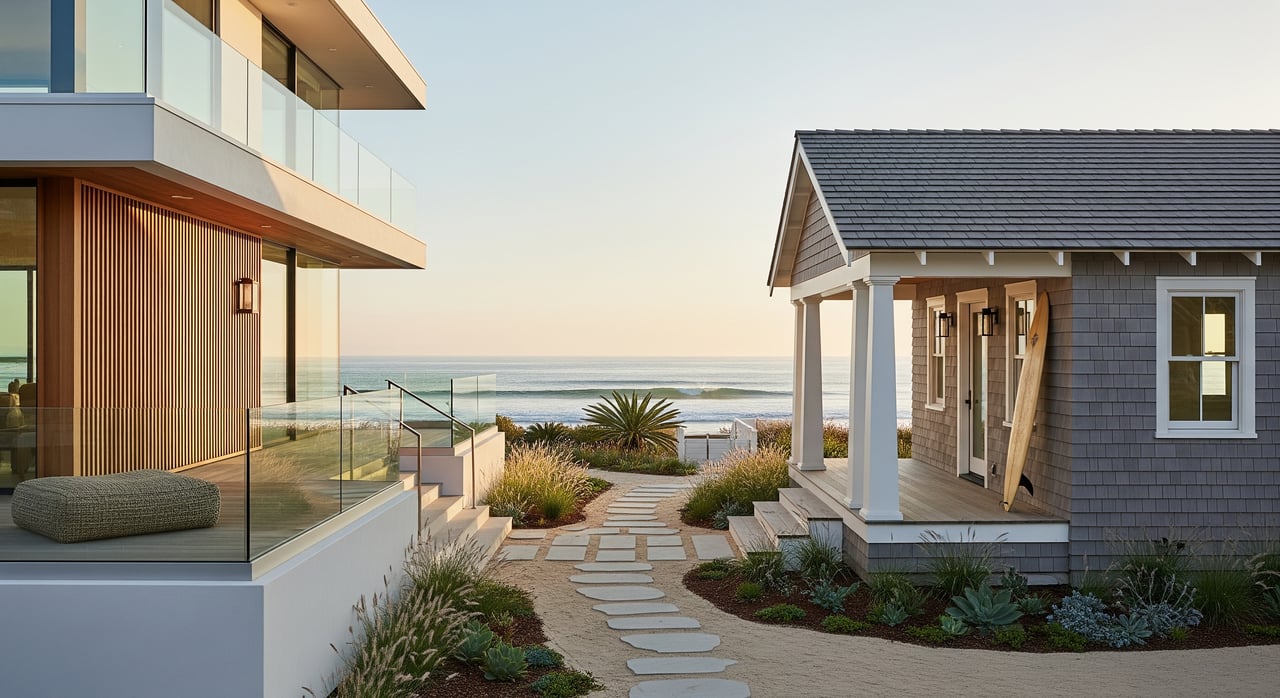
Thinking about Encinitas homes for sale but torn between a sleek new build and a classic beach cottage? You are not alone. Each path offers a different lifestyle, cost profile, and maintenance plan, especially along the coast. In this guide, you will see what to expect with both options, how Encinitas’s coastal environment affects your decision, and the exact inspections and documents to prioritize. Let’s dive in.
Encinitas coastal reality
Living near the ocean changes how homes age and perform. In areas with Encinitas homes for sale, the coastal environment plays a major role in property maintenance. Encinitas has a Mediterranean climate with a frequent marine layer, so salt air and moisture are constant. That means exterior metal can corrode faster, and moisture intrusion is a bigger risk than inland.
Parts of Encinitas sit near coastal bluffs or within coastal influence areas. Location matters for slope stability, bluff erosion, and long-term sea-level considerations. If a property is bluff-adjacent or in a coastal zone, you will want to verify site-specific risks and any development limitations before you submit an offer.
New build: what to expect
Advantages
- Built to current building codes for structure, fire safety, and energy efficiency.
- Often includes modern systems, updated electrical panels, and new plumbing, with energy features that align with California Title 24 standards. Many recent single-family homes include on-site solar.
- Lower near-term maintenance, plus builder warranty coverage. Typical structures include workmanship coverage around one year, systems coverage for a couple of years, and longer structural coverage, though terms vary by builder.
Watch-outs
- Quality can vary. Common defect areas include exterior waterproofing details, window flashing, stucco finish, and HVAC duct balancing.
- Multi-level rebuilds on tight lots can have drainage and grading challenges that lead to water intrusion or neighbor disputes.
- Some engineered products react differently to coastal moisture. Material selection and correct installation are critical.
Beach cottage: what to expect
Advantages
- Architectural charm, human-scale living, and often excellent proximity to the beach and established neighborhoods.
- Mature landscaping and established lot patterns.
Common challenges
- Many cottages predate today’s codes. You may see older electrical, minimal insulation, outdated plumbing, or lead-based paint in pre-1978 homes.
- Higher risk of wood rot and termite damage in coastal San Diego, especially at decks, porch supports, and subfloors.
- Non-permitted additions are common, and original permit records can be incomplete.
Costs and maintenance to plan for
Your total cost of ownership depends on condition, construction quality, and location. Here is what many coastal buyers plan for:
- Roof: asphalt shingles often last around 15 to 25 years near the coast. Tile and metal can last longer with proper maintenance.
- Exterior finishes: sun and salt can shorten paint and stucco cycles. Expect more frequent touch-ups than inland.
- Termite and wood-destroying organism care: plan regular inspections, often annually or biannually.
- Decks and balconies: elevated elements may need significant repair or replacement roughly every decade, depending on exposure and materials.
- Systems: HVAC often lasts around 10 to 20 years; water heaters around 8 to 15 years; windows and doors around 15 to 30 years. Coastal salt can reduce hardware and seal life.
- Solar systems: panels typically have 25-year performance warranties, while inverters can have shorter warranties. Always verify permits, paperwork, and system specs.
In general, new builds cost more upfront and less in near-term maintenance, while cottages may have a lower entry price but higher short-to-mid-term capital needs for roof, systems, termite remediation, and energy upgrades.
Insurance and coastal hazards
Insurance can differ by age and location. Properties closer to the ocean or in higher-risk zones may see higher premiums or fewer carrier options. Standard homeowner policies do not cover flood, so you should check a property’s flood zone status and whether a lender will require flood insurance.
Earthquake insurance in California is a separate policy. Older homes sometimes need seismic retrofits to meet underwriting standards. Insurers may also require updates such as electrical panel upgrades or replacement of certain plumbing materials before issuing or renewing a policy.
Permits, disclosures, and the Coastal Zone
If a home lies within Encinitas’s Coastal Zone, major work can trigger Coastal Development Permit requirements. Setbacks and allowable renovations can also differ. For older cottages, non-permitted work can complicate insurance, financing, and resale.
Sellers in California must provide Transfer Disclosure Statements and share known material facts. Even so, the quality of records varies, so inspections and permit checks are essential. For new builds, request the final inspection, certificate of occupancy, and all warranty documents.
Inspection checklist: new build vs. cottage
A thorough inspection plan protects you in any coastal purchase. Start here:
- Full home inspection that covers structure, roof, plumbing, electrical, and HVAC.
- Termite and WDO inspection. This is critical in coastal San Diego.
- Roof inspection by a qualified roofer to verify age, flashing, and deck condition.
- Sewer lateral scope to check for root intrusion or blockages in older lines.
- Utility and meter checks for gas, water, and electric.
For new builds
- Confirm all permits and the final sign-off or certificate of occupancy.
- Validate drainage and grading around the foundation.
- Check waterproofing details, window and door seals, insulation in walls and attic, and HVAC duct installation and balance.
- Confirm the builder warranty terms, claim process, and responsible parties.
For beach cottages
- Focus on roof, flashing, chimneys, and any evidence of past leaks.
- Crawlspace and subfloor checks for rot and termite damage.
- Electrical safety and capacity, including grounding and protection devices.
- Plumbing materials and age, with attention to older supply and drain lines.
- If there are signs of settlement or major alterations, consider a structural engineer. If the home is on or near a bluff, consider a geotechnical review.
Paperwork to request
- Seller disclosures, pest reports, and any recent inspection reports.
- Permits and final sign-offs for additions and renovations.
- Warranties for systems and appliances, plus solar paperwork and interconnection records if solar is present.
How Barbara vets each option for you
Barbara follows a clear, step-by-step workflow so you can compare options with confidence:
- Initial screening and context
- Confirm proximity to the beach, bluff conditions, and any flood or tsunami mapping.
- Review neighborhood trends, including teardown and new build activity vs. preserved cottages.
- Document and permit review
- Request permits, sign-offs, certificates of occupancy, maintenance history, termite reports, and warranties.
- For new builds, add builder warranty documents and any construction inspection reports.
- Inspections and specialists
- Order a full home inspection and WDO inspection at minimum.
- For new builds, schedule an independent punch-list inspection. For cottages, add structural or geotechnical specialists as indicated.
- Include roof, sewer scope, and solar or electrical checks as needed.
- Insurance and financing checks
- Get preliminary quotes for homeowners, flood when required, and earthquake insurance.
- Ask carriers about age or condition exclusions that could affect insurability or cost.
- Cost forecasting
- Obtain contractor estimates for anticipated items like roof work, termite repairs, HVAC, windows, and decking.
- For new builds, plan for post-warranty items and finish adjustments.
- Neighborhood and lifestyle fit
- Walk the area at different times to evaluate parking, beach access, noise, and drainage patterns.
- Review any HOA rules or local ordinances that affect your plans.
- Closing protections and post-purchase planning
- For new builds, document punch-list items and timelines, and confirm warranty procedures.
- For cottages, include contingencies for material repairs and consider escrow holdbacks when appropriate.
Which path fits you best
- Choose a new build if you prefer lower near-term maintenance, modern systems and energy efficiency, and clear warranties. You still need to verify quality and drainage.
- Choose a beach cottage if you value character, mature lots, and often closer-in locations. Plan for inspections and a renovation budget.
- In both cases, your true total cost depends on location, construction quality, and how well previous owners maintained the home.
Ready to make a confident move in Encinitas? Connect with boutique guidance and a clear process from start to finish. Reach out to Barbara Huba to compare your options and create a plan that fits your lifestyle and budget.
FAQs
What is the biggest difference in ongoing costs between new builds and Encinitas cottages?
- New builds usually have lower immediate maintenance and better energy performance, while older cottages often need earlier investments in roof, systems, termite remediation, and insulation or window upgrades.
How important are termite and WDO inspections for Encinitas coastal homes?
- They are very important, and many owners plan for annual or biannual inspections due to the coastal climate and elevated wood-damaging pest risks.
Do most new single-family homes in Encinitas include solar?
- Most homes built under California’s recent Title 24 standards include on-site solar or are solar-ready, but you should always verify permits and system specifications.
What permits should I confirm before I buy a beach cottage?
- Ask for permits and final sign-offs on any additions or structural changes, plus seller disclosures and any structural or geotechnical reports that relate to the lot.
When should I bring in a structural or geotechnical engineer in Encinitas?
- Hire specialists if you see settlement, major alterations, or slope or bluff adjacency, or if your inspector flags a concern that needs expert evaluation.