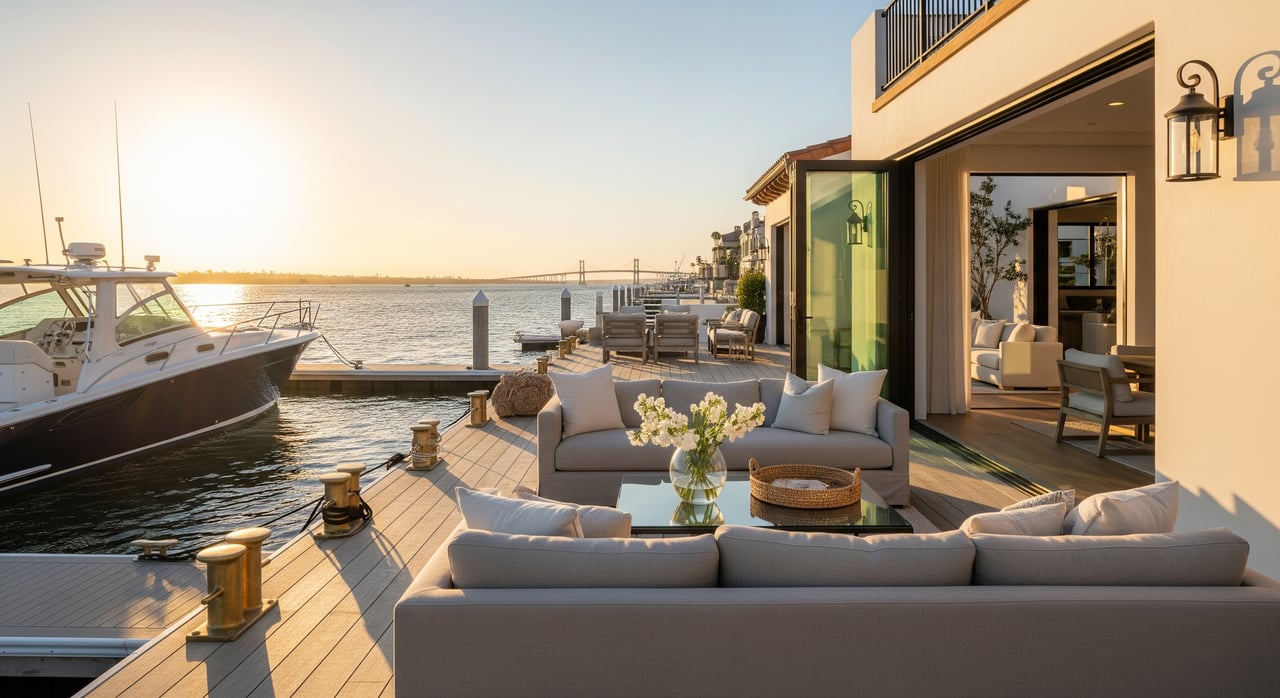
Thinking about selling your Coronado Cays waterfront home this season? You know buyers love the docks, views, and easy bay access, but they also ask detailed questions about permits, seawalls, and safety. A thoughtful prep plan helps you answer with confidence, reduce escrow friction, and protect your bottom line. In this guide, you’ll learn what to inspect, how to document ownership and approvals, and the steps to launch a clean, credible listing. Let’s dive in.
Why Cays listings need extra prep
Waterfront homes in the Coronado Cays involve docks, pilings, seawalls, and often boat lifts. These features sit at the intersection of local building rules, HOA standards, and oversight tied to navigable waters. That means more scrutiny from buyers and their lenders. When you clarify permits, ownership, and condition early, you set the stage for smoother negotiations and a stronger price.
Map your ownership and obligations
Before you schedule photos or staging, confirm who owns and maintains the waterfront structures. In the Cays, a dock or seawall may be privately owned, shared, or fall under HOA maintenance rules. Title documents and HOA records will spell this out. Clear answers on ownership help buyers understand responsibilities and avoid surprises later.
What to verify first
- Title and recorded easements tied to the dock and shoreline.
- HOA CC&Rs, architectural approvals, and any design standards for docks or lifts.
- City of Coronado permit history for dock, lift, electrical, and seawall work.
- Whether any structure encroaches into navigable waters or areas overseen by harbor authorities or state and federal agencies.
Order the right pre-listing inspections
Buyers and lenders look for professional reports on waterfront components. Ordering inspections before you list lets you address safety items and present a complete picture.
Core inspections to schedule
- Marine or dock structural inspection to assess pilings, framing, joinery, fasteners, decking, and fenders.
- Seawall or bulkhead evaluation by a coastal or structural engineer to identify movement, cracking, or scour.
- Boat lift check by a qualified marine mechanic and electrician to confirm capacity, motors, cables, and controls.
- Marine-grade electrical inspection of shore power, receptacles, bonding, grounding, and GFCI protection.
- Environmental screening if you see signs of fuel or oil contamination.
- Survey or as-built verification to confirm the dock footprint relative to property lines and easements.
Build a watertight disclosure packet
A complete packet answers buyer questions up front and signals that your home is well cared for. Aim to compile everything into a single PDF that your agent can share with buyer agents and attach to the MLS.
What to include
- Permits and closure documents for dock, lift, electrical, and seawall work.
- Engineering reports, marine surveyor findings, and any prior inspection histories.
- HOA approvals, architectural committee correspondence, and maintenance obligations.
- Title documents showing dock ownership and any recorded easements or rights-of-way.
- Boat lift documentation: model, capacity, service records, and manuals.
- Maintenance invoices for lift service, electrical work, or dock updates.
- Insurance claim history and current flood or coastal insurance information.
- Recent, timestamped photos and short video of the dock, pilings, and seawall.
- Standard California disclosures completed with waterfront specifics.
Verify permits and HOA approvals
Buyers routinely ask if work was permitted, inspected, and closed. Pull records from the City of Coronado and compare them to current conditions. If you find open or expired permits, decide whether to close them before listing or disclose with a remediation plan and quotes. Align your strategy with HOA requirements, since many dock and lift changes require architectural approval.
Anticipate buyer objections early
When you know the questions, you can answer them. Common concerns include structural safety, unpermitted work, unclear ownership, and flood exposure. Prepare your responses with signed reports, permit records, and maintenance history.
How to head off the big questions
- Provide a recent engineer or marine surveyor report with safety findings and lifespan estimates.
- Close open permits where feasible, or include written plans, timelines, and contractor quotes.
- Clarify dock and seawall ownership and maintenance in writing with title and HOA documents.
- Share lift capacity and proof of recent service so boat owners can plan with confidence.
- Include flood zone information and current insurance quotes to contextualize risk and cost.
Set a smart sequence and timeline
The right order saves weeks. Start with ownership and records, then move to inspections, then repairs and documentation. You want safety and code items handled before the first showing.
Recommended sequence
- Pull title, easements, and HOA records; request City permit history.
- Order inspections: marine surveyor, seawall engineer, and marine electrician.
- Sort findings into safety, code, cosmetic, and long-term maintenance.
- Decide which items to repair now versus disclose and price accordingly.
- Address open permits or obtain retroactive approvals if needed.
- Assemble your single PDF waterfront packet and prep for launch.
Budget and prioritize what matters
Waterfront costs vary widely by scope and contractor availability. Inspections may take a few days to a couple of weeks. Simple permits can wrap up in weeks, while complex coastal or in-water work can take months. Focus your budget on safety, code, and permit closure to avoid lender or underwriting delays.
Prioritization rules of thumb
- Address electrical hazards, compromised decking, and failing pilings first.
- Close or document open permits to prevent escrow holdbacks.
- For seawalls nearing end of life, obtain a professional assessment and cost range so buyers can price the work into their offer.
What to include in your MLS disclosures
Your MLS package should make it easy for a buyer to say yes. Keep it organized, labeled, and current.
- Title evidence of dock ownership and any easements.
- Permit history with closure documents and inspection sign-offs.
- Engineering and marine reports dated within the last 12 months.
- Marine electrician report and proof of lift service.
- HOA rules and approvals specific to docks and seawalls.
- Quotes or invoices for completed or planned repairs.
- Flood zone details and current insurance information.
- Standard California forms, including Transfer Disclosure Statement and Natural Hazard Disclosure, with waterfront notes.
Who to call and what to ask
Having the right pros on your side is half the battle. When you contact agencies and contractors, ask for signed, dated reports and clear timelines.
Helpful contacts
- Coronado Cays HOA and Architectural Review team for approvals, standards, and maintenance obligations.
- City of Coronado Building and Permitting for permit history and open inspections.
- Harbor or regional authorities if any structure touches navigable waters or tidelands.
- Licensed marine surveyor or contractor for a written condition report and lifespan estimate.
- Coastal or structural engineer for seawall assessment and repair cost ranges.
- Marine electrician for shore power, bonding, and GFCI safety verification.
- Title company or escrow for vesting, liens, and recorded easements.
Smart questions to ask
- Can you provide a signed report with immediate safety issues, recommended fixes, and cost ranges?
- How long will permits and approvals take for the suggested work?
- Have you completed similar projects in the Coronado Cays, and can you share references or photos?
Avoid common escrow delays
Late discovery of waterfront issues can trigger lender conditions or escrow holdbacks. Provide inspections and insurance details early so underwriters and appraisers see a clear path to closing. Full transparency around flood zones, permits, and structural life expectancy builds trust and protects you after the sale.
Your next steps
- Confirm dock and seawall ownership in title and HOA records.
- Pull City permits and resolve open items where feasible.
- Order marine, seawall, and electrical inspections and address safety issues.
- Gather insurance info, maintenance history, and high-quality visuals.
- Package everything in a clean, single PDF to share with buyers.
When you present a Coronado Cays waterfront home with clean permits, recent inspections, and clear ownership, you control the narrative and negotiate from strength.
Ready to Make Your Move? If you want a calm, strategic plan to list your Coronado Cays waterfront home, let’s talk. I can coordinate inspections, disclosures, and pre-market prep so you launch with confidence. Connect with Unknown Company to get started.
FAQs
What inspections do I need for a Coronado Cays waterfront listing?
- Schedule a marine or dock structural inspection, a seawall or bulkhead engineer evaluation, a marine electrician safety check, and lift servicing if you have a boat lift.
How long do permits and approvals take in Coronado Cays?
- Simple permits or closures may resolve in weeks, while complex coastal or in-water work that involves multiple agencies can take months, so start early.
Who maintains the dock or seawall for a Cays property?
- Maintenance depends on ownership and HOA rules, so verify title documents and HOA CC&Rs to see whether the owner, HOA, or both have responsibility.
How do FEMA flood zones impact my sale in the Cays?
- Flood zones can affect insurance and lender requirements, so include zone details and current premiums or quotes in your disclosure packet.
What if prior dock or lift work was unpermitted?
- Decide whether to pursue retroactive permits or disclose with contractor plans and quotes; either way, document the path forward to reduce buyer concerns.
Should I repair seawall issues before listing or offer a credit?
- Address safety items first, then consider an engineer’s report with cost ranges; you can complete repairs pre-listing or disclose and price accordingly based on scope.